
Tesla’s Strategic Shift: Navigating Auto Pressures with AI and Energy Growth
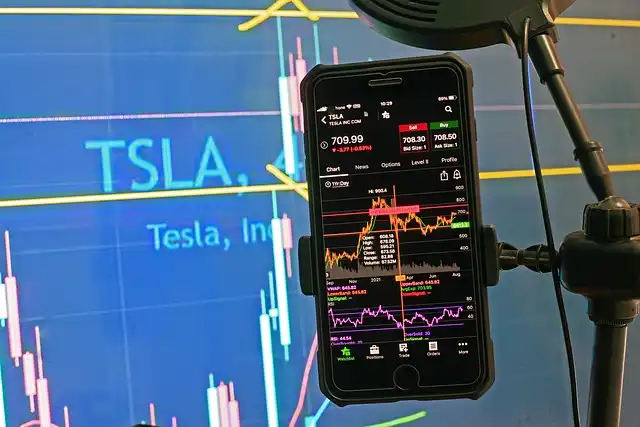
Tesla shifts investor focus from a 61% drop in net income to future bets in AI and robotaxis. Despite automotive struggles, record energy storage growth keeps the Magnificent 7 firm’s story alive.
Tesla can still discover ways to feed the story the marketplace still values: freedom bordering better to procedures, power compounding silently, and AI positioned as the long-term payoff. The threat, hanging over the entire print– again, customarily– is how long financiers are willing to look past an auto business under pressure while awaiting those future wagers to solidify right into something concrete.
The vehicle service, as soon as the undoubted focal point of the Tesla tale, currently feels like the component investors skim. The descriptions were familiar– prices, costs, tolls, rewards– but the result was more challenging to ignore: Selling cars has actually become a tougher, much more competitive organization, and Tesla no longer looks shielded from that truth.
The Pivot Toward Autonomous Mobility and Robotaxis
Tesla leaned hard into robotaxis, saying it started evaluating driverless rides in Austin late in 2015 and began eliminating security displays from some consumer experiences in January on a restricted basis. It likewise published an ambitious map of cities it intends to offer in 2026. The details immediately triggered argument concerning what counts as “unsupervised,” exactly how constricted the rollout stays, and how much Tesla still is from something that appears like a scalable business service. That debate really did not reduce the rally, just strengthening the factor that Tesla is still being priced on optionality, not verification.
Tesla $TSLA didn’t upload the kind of quarter that typically lifts a supply. It was a harsh method to shut out a year that was Tesla’s most tough in a long time; the firm posted its first-ever annual revenue decrease, revealing just exactly how far this Stunning 7 business has actually dropped from its most spectacular high-growth age.
The vehicle company, as soon as the undoubted centerpiece of the Tesla tale, currently seems like the component investors skim. Automotive earnings fell once again, and margins remain thin by the firm’s very own historic standards. The descriptions were familiar– prices, costs, tariffs, motivations– however the outcome was more challenging to neglect: Marketing automobiles has actually become a harder, much more affordable business, and Tesla no longer looks shielded from that reality.
Dissecting the Numbers: A Challenging Year for Automotive
By the numbers, the quarter was wounding. Net income went down 61% from a year previously, auto profits moved 11%, and total deliveries dropped by double digits. Expenses increased, running leverage worked in opposite, and the cars and truck service looked stuck in an acquainted work of rates stress, greater expenditures, and softer need. It was a harsh way to close out a year that was Tesla’s most difficult in a very long time; the business posted its first-ever annual revenue decline, revealing just exactly how far this Spectacular 7 firm has dropped from its most amazing high-growth age.
Yet Tesla beat consensus assumptions on modified revenues (at $0.50 per share), and that was enough to aid maintain the supply relocating. The remainder of the lift came from something a lot more long lasting: Tesla’s capability to keep the marketplace focused on what comes next, rather than what just occurred.
Tesla $TSLA really did not post the type of quarter that typically raises a supply. Earnings fell greatly, deliveries decreased, and margins stayed under stress. Yet after-hours trading told a various story– up 4% originally– one that has less to do with cars and more to do with the future financiers still intend to rely on.
That positioning comes with an expense– a big one. Tesla’s general expenses climbed up greatly, driven in component by its increasing AI and study efforts. The company highlighted its growing AI calculate footprint and future chip strategies, mounting higher investing today as a bridge to higher-margin software application and fleet earnings tomorrow. It’s a tale financiers know well by now. It’s likewise a tale they keep selecting to fund.
Strategic Investments and the AI Subplot
As common, came the Musk subplot. Tesla disclosed plans to invest regarding $2 billion in xAI, Musk’s artificial intelligence firm, together with a framework contract to discover cooperation. That, obviously, bundles numerous unsettled questions into one line thing: administration, funding allocation, and exactly how firmly Tesla’s fate is currently tied to Musk’s broader AI passions. It additionally pulls Tesla more securely right into the AI profession, a place the marketplace continues to compensate kindly.
The information immediately stimulated dispute concerning what counts as “without supervision,” how constrained the rollout continues to be, and just how far Tesla still is from something that looks like a scalable business solution.
Optimus and the Future of Physical AI Production
On the earnings phone call, chief executive officer Elon Musk stated Tesla plans to finish Model S and Model X $TWTR manufacturing in Q2 2026, maximizing area for manufacturing of its Optimus humanoid robotic– a relocation that turns the “physical AI” pitch right into an actual factory schedule. Tesla’s Design 3 and Version Y have currently swallowed the business, making up concerning 97% of Tesla’s roughly 1.64 million deliveries in 2015, which leaves S and X as brand artefacts with diminishing calculated weight.
Energy Storage: A Reliable Pillar of Profitability
Power, by comparison, continues to behave like a company with energy, with earnings increasing 25% to $3.84 billion. Storage space releases struck a document 14.2 gigawatt hours, and the section published its fifth straight quarter of record gross earnings ($1.1 billion). In a quarter defined by softness in other places, energy looked scalable, profitable, and much easier to model without heroic assumptions. Power is ending up being the part of Tesla that looks least like a bet.
1 artificial intelligence2 Electric vehicle market
3 Elon Musk
4 Energy Storage
5 Musk claimed Tesla
6 Robotaxi future
« Tech CEOs Tim Cook and Sam Altman Respond to Immigration TensionsBroward County Schools to Consolidate Six Campuses Amid Enrollment Decline »